
The Illinois Chapter of ARCS® Foundation has granted awards to a total of nine scholars for academic year 2026-2027. These scholars were selected from three of our Academic Partners:
Awards will be presented at the Annual Scholar Awards Luncheon on October 6, 2026.
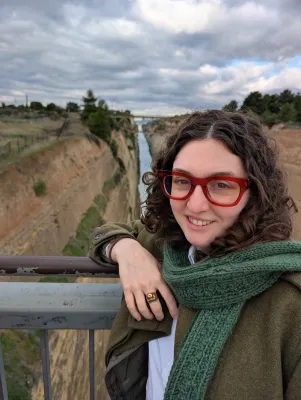
PhD in Neurobiology
Aileen S. Andrew Foundation ARCS Scholar Award
Genevieve studies methanotrophs, bacteria that consume methane as their source of energy. Methanotrophs have copper-containing enzymes at their cell membranes that catalyze methane to methanol. Genevieve studies this enzyme across species to gain a fundamental understanding of this process that could later be engineered to directly remove methane from the atmosphere.
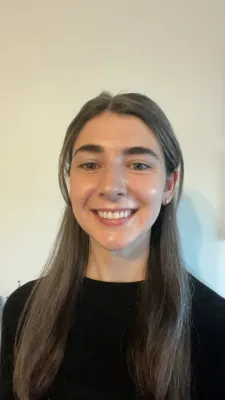
PhD in Neurobiology
Aileen S. Andrew Foundation ARCS Scholar Award
Maggie is researching how hormones act on brain cells to modify reproductive behavior. She is working to identify key molecular processes altered across reproductive stages.

PhD in Physics
Jocelyn Stoller ARCS Foundation Scholar Award
Gina is working to develop scalable methods to connect separated quantum computing devices. Her goal is to provide a basis for future quantum computer networking or distributed quantum computing protocols that can operate within an existing fiber infrastructure.

MD/PhD in Neuroscience
The Brinson Foundation ARCS Scholar Award
Hunter's research focuses on motor neuron plasticity and neurodevelopmental diseases. This research has significant implications for diseases like ALS.
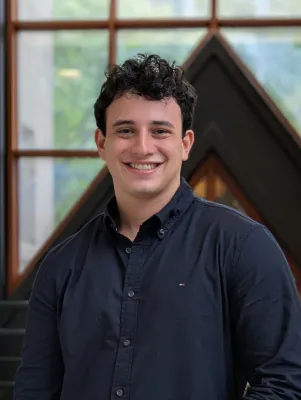
PhD in Physics
ARCS Foundation Scholar Award
Michael's research is dedicated to the study of quantum materials. Most notably, he was responsible for the design and construction of an ultra-high vacuum structure.

PhD in Physics
The Brinson Foundation ARCS Scholar Award
Stephanie Damish is a second-year PhD student in astrophysics. Her work combines data analysis and instrumentation to advance the next generation of experiments measuring the radiation leftover from the Big Bang, known as the cosmic microwave background (CMB). This work will improve the technology used to study the early universe and deepen our understanding of how the universe came to be.
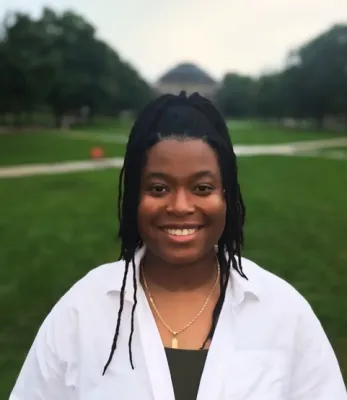
PhD in Geology
The Brinson Foundation ARCS Scholar Award
Lexie's research uses quantitative models of magma dynamics to forecast volcanic eruptions.

PhD in Materials Science and Engineering
Jones-Whitford ARCS Scholar Award
Bobby studies magnetization dynamics on a nanoscale level. The goal is to demonstrate technology for miniaturized microwave frequency devices in microwave electronics and quantum computers.
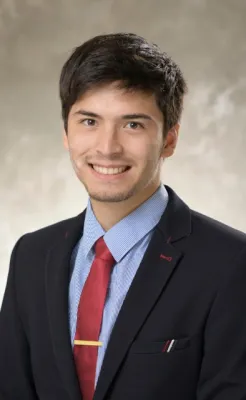
PhD in Bioengineering
The Brinson Foundation ARCS Scholar Award
Kevin's research examines how exposure to magnetic fields may alter the chemical reactions inside cells, causing those cells to become stressed and change their behavior.